
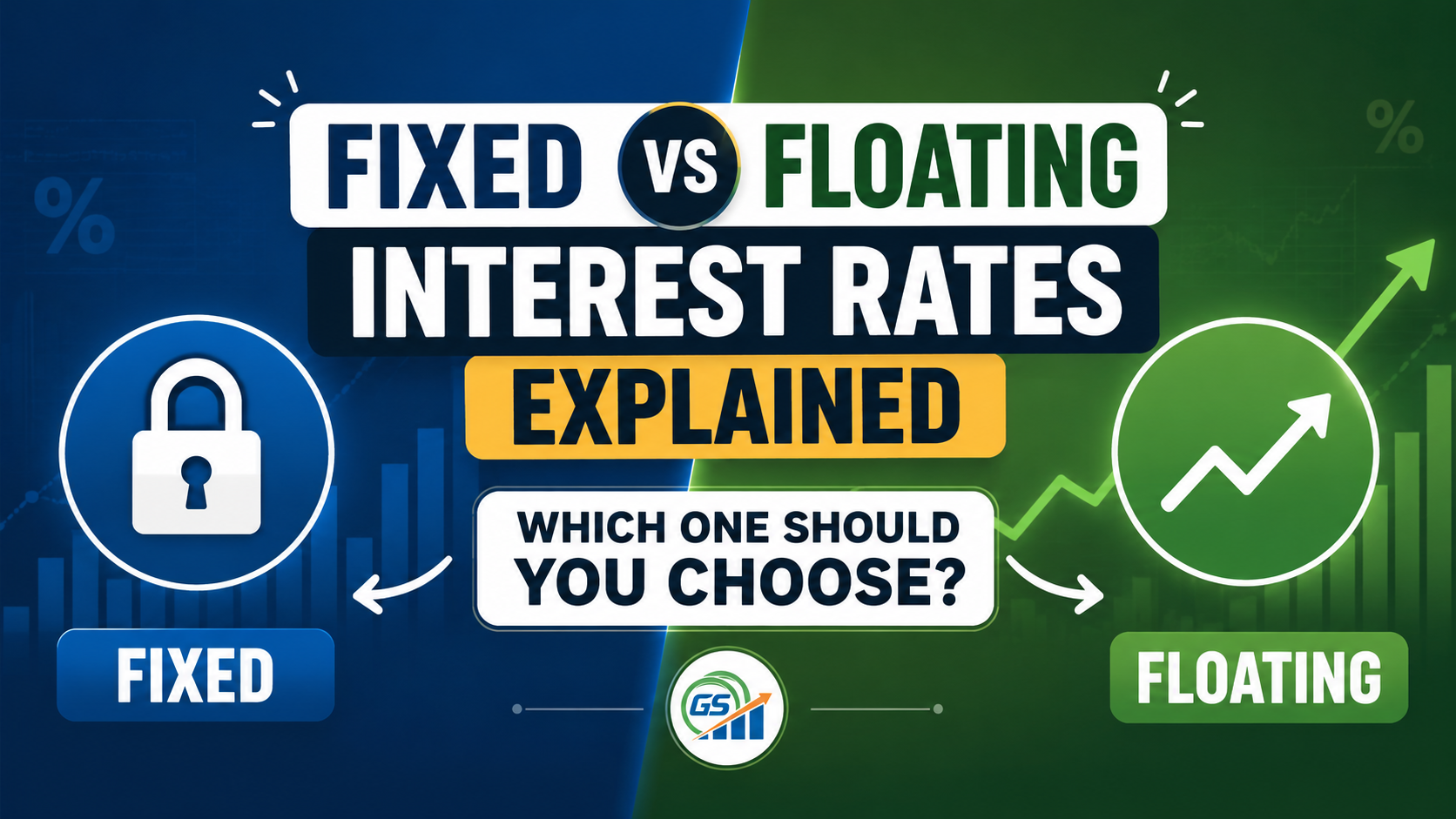
When taking a home loan, personal loan, or business loan, one of the most important decisions you’ll make is choosing between a fixed interest rate and a floating interest rate. Understanding the difference can help you save money and manage your finances more effectively.
In this guide, we’ll explain fixed and floating interest rates, their advantages and disadvantages, and how to determine which option is right for you.
What Is a Fixed Interest Rate?
A fixed interest rate remains the same throughout the loan tenure or for a specified period. Regardless of changes in market conditions or central bank policies, your interest rate and EMI (Equated Monthly Installment) remain unchanged.
Advantages of Fixed Interest Rates
- Predictable monthly payments
- Easier budgeting and financial planning
- Protection against rising interest rates
- Greater peace of mind during economic uncertainty
Disadvantages of Fixed Interest Rates
- Usually higher than floating rates at the beginning
- You may not benefit if market interest rates decrease
- Some lenders charge higher prepayment penalties
What Is a Floating Interest Rate?
A floating interest rate changes according to market conditions and benchmark lending rates. If market rates increase, your loan interest rate may rise. If rates decrease, your loan interest rate may also fall.
Advantages of Floating Interest Rates
- Generally lower initial interest rates
- Opportunity to benefit from falling market rates
- Lower prepayment penalties in many cases
Disadvantages of Floating Interest Rates
- Monthly EMIs may fluctuate
- Financial planning becomes less predictable
- Total loan cost may increase if rates rise significantly
Fixed vs Floating Interest Rates: Key Differences
| Feature | Fixed Rate | Floating Rate |
|---|---|---|
| Interest Rate | Remains constant | Changes with market rates |
| EMI Amount | Stable | May increase or decrease |
| Budget Planning | Easy | Less predictable |
| Initial Rate | Usually higher | Usually lower |
| Risk Level | Lower | Higher |
| Benefit from Rate Cuts | No | Yes |
When Should You Choose a Fixed Interest Rate?
A fixed interest rate may be suitable if:
- You prefer predictable monthly payments.
- You have a fixed monthly income.
- You expect interest rates to rise in the future.
- You want financial stability and peace of mind.
When Should You Choose a Floating Interest Rate?
A floating interest rate may be suitable if:
- You can handle occasional EMI fluctuations.
- You expect interest rates to remain stable or decline.
- You are looking for lower initial borrowing costs.
- You plan to prepay the loan in the future.
Example: Fixed vs Floating Loan
Imagine you take a ₹20 lakh loan for 10 years.
Fixed Rate Loan
- Interest Rate: 9%
- EMI remains constant throughout the tenure.
Floating Rate Loan
- Initial Interest Rate: 8.5%
- EMI may increase if market rates rise or decrease if rates fall.
If interest rates decline over the next few years, the floating rate borrower may save a significant amount. However, if rates increase, the fixed-rate borrower could benefit from lower overall costs.
Which Option Is Better?
There is no one-size-fits-all answer. The right choice depends on your financial goals, risk tolerance, and market expectations.
Choose a Fixed Interest Rate if you value stability and predictable payments.
Choose a Floating Interest Rate if you’re comfortable with some risk and want the opportunity to benefit from lower market rates.
Final Thoughts
Before selecting a loan, carefully compare both fixed and floating interest rate options. Consider your income stability, financial commitments, and future interest rate trends. Consulting a financial advisor can also help you make an informed decision.
At GS Financial Services, we help individuals and businesses choose the right loan solutions based on their financial needs. Contact us today for expert guidance on home loans, personal loans, business loans, and financial planning.