
Introduction
Debt is a common part of modern life. Whether it’s a home loan, personal loan, credit card balance, or education loan, borrowing money can help achieve important financial goals. However, when debt becomes overwhelming, it can create stress and affect your financial well-being.
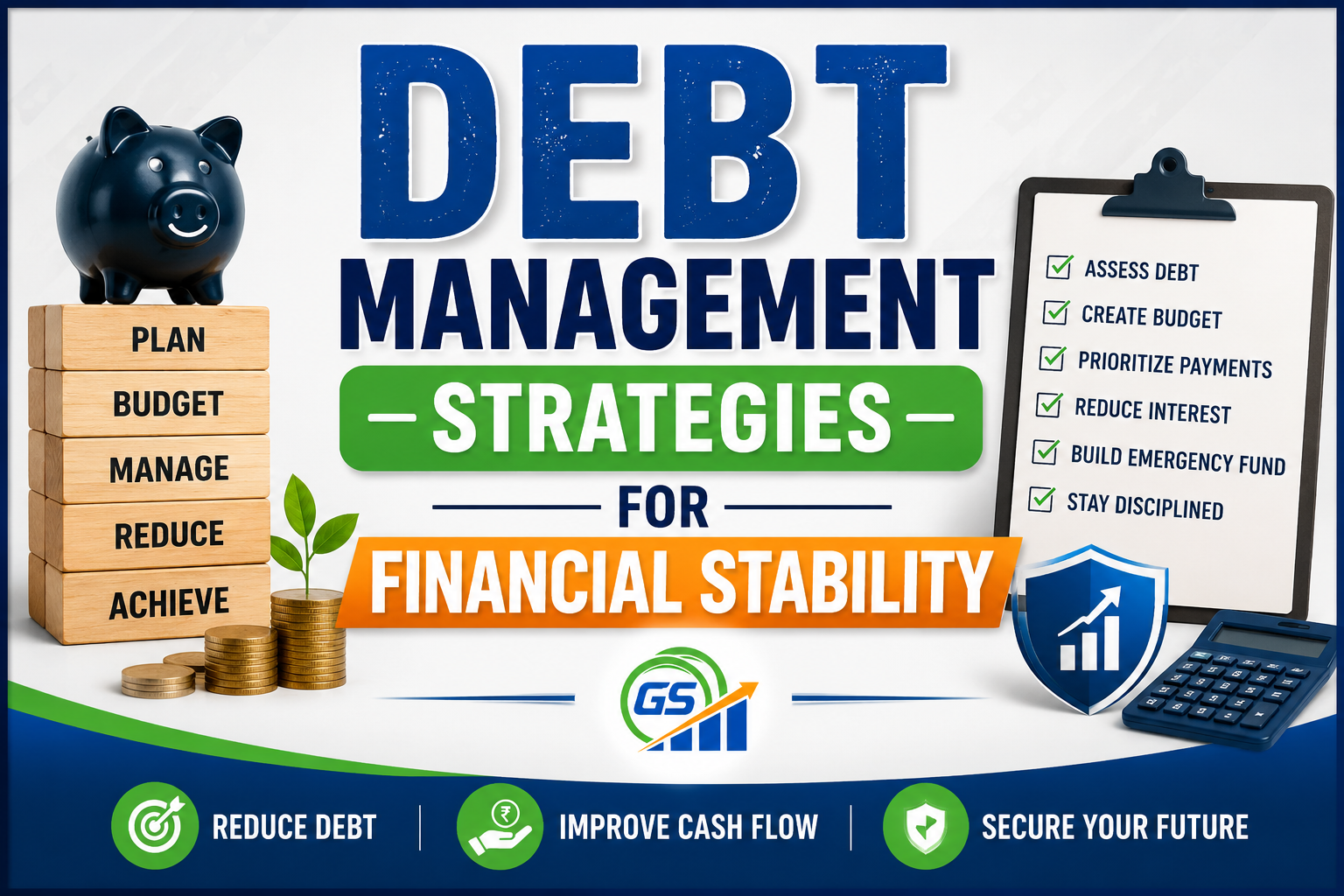
Effective debt management is essential for maintaining financial stability and achieving long-term financial success. By understanding your debt and implementing smart repayment strategies, you can take control of your finances and build a secure future.
In this article, we’ll explore practical debt management strategies that can help you reduce debt, improve your financial health, and achieve peace of mind.
Understanding Debt: Good Debt vs Bad Debt
Before creating a debt management plan, it’s important to understand the difference between good debt and bad debt.
Good Debt
Good debt helps you build wealth or increase your earning potential. Examples include:
- Home loans
- Education loans
- Business loans
- Investment-related loans
Bad Debt
Bad debt typically finances depreciating assets or unnecessary spending. Examples include:
- High-interest credit card debt
- Payday loans
- Unplanned consumer purchases
- Excessive personal loans
The goal is not to eliminate all debt but to manage it wisely.
Assess Your Current Financial Situation
The first step toward effective debt management is understanding where you stand financially.
Create a list of:
- Outstanding loan balances
- Interest rates
- Monthly EMI payments
- Loan tenure
- Credit card balances
This overview will help you identify which debts require immediate attention and develop a realistic repayment strategy.
Create a Monthly Budget
A well-planned budget is one of the most effective tools for debt management.
Track Your Income and Expenses
Divide expenses into categories such as:
- Housing
- Transportation
- Utilities
- Food
- Insurance
- Entertainment
- Debt repayments
Identify areas where spending can be reduced and redirect those savings toward debt repayment.
Follow the 50-30-20 Rule
- 50% for needs
- 30% for wants
- 20% for savings and debt repayment
This simple budgeting framework can help maintain financial discipline.
Prioritize High-Interest Debt
High-interest debt can quickly grow and become difficult to manage.
Debt Avalanche Method
Focus on paying off the debt with the highest interest rate first while making minimum payments on other debts.
Benefits:
- Saves money on interest
- Reduces total repayment cost
- Accelerates debt freedom
This strategy is ideal for individuals seeking maximum financial efficiency.
Use the Debt Snowball Method
The debt snowball method focuses on paying off the smallest debt first.
How It Works
- List debts from smallest to largest balance.
- Pay minimum amounts on all debts.
- Put extra money toward the smallest debt.
- Once paid off, move to the next debt.
Benefits:
- Builds motivation
- Creates quick wins
- Encourages consistent repayment habits
This approach is particularly effective for people who need psychological motivation.
Consolidate Multiple Debts
Managing several loans and credit card payments can be confusing.
Debt consolidation combines multiple debts into a single loan with a potentially lower interest rate.
Advantages
- Simplified repayment
- Lower monthly payments
- Better cash flow management
- Reduced financial stress
Before consolidating, compare interest rates, processing fees, and repayment terms carefully.
Avoid Taking New Debt
One of the biggest mistakes people make while repaying debt is accumulating additional debt.
To stay on track:
- Avoid unnecessary purchases
- Limit credit card usage
- Delay non-essential expenses
- Focus on needs over wants
Financial discipline plays a crucial role in becoming debt-free.
Build an Emergency Fund
Unexpected expenses often force people to rely on credit cards or loans.
An emergency fund provides a financial safety net for situations such as:
- Medical emergencies
- Job loss
- Vehicle repairs
- Home maintenance
Financial experts generally recommend saving three to six months of living expenses in an emergency fund.
Increase Your Income
While reducing expenses helps, increasing income can accelerate debt repayment.
Consider:
- Freelancing
- Part-time work
- Online consulting
- Selling unused items
- Starting a side business
Additional income can be directed entirely toward debt reduction, helping you become debt-free faster.
Negotiate with Lenders
If you’re struggling to make payments, communicate with your lenders.
Many financial institutions offer:
- Loan restructuring
- Temporary payment relief
- Lower interest rates
- Extended repayment periods
Early communication can prevent defaults and protect your credit score.
Improve Your Credit Score
A healthy credit score is an important part of financial stability.
To improve your score:
- Pay EMIs on time
- Maintain low credit utilization
- Avoid multiple loan applications
- Monitor your credit report regularly
A higher credit score can help you qualify for better loan terms and lower interest rates in the future.
Seek Professional Financial Advice
If debt feels overwhelming, consider consulting a financial advisor.
A professional can help you:
- Create a repayment plan
- Manage cash flow
- Consolidate debt effectively
- Develop long-term financial goals
Expert guidance can save both time and money.
Benefits of Effective Debt Management
Successful debt management offers several advantages:
Reduced Financial Stress
Lower debt levels lead to greater peace of mind.
Improved Cash Flow
More money becomes available for savings and investments.
Better Credit Score
Responsible debt management strengthens your credit profile.
Increased Financial Freedom
Less debt means more flexibility to pursue life goals.
Stronger Financial Future
You can focus on wealth creation rather than debt repayment.
Conclusion
Debt doesn’t have to control your life. With proper planning, disciplined budgeting, and strategic repayment methods, you can successfully manage your debt and achieve long-term financial stability.
Whether you choose the debt avalanche method, debt snowball strategy, debt consolidation, or a combination of approaches, consistency is the key to success.
Remember, every small step toward reducing debt brings you closer to financial freedom. Start today, stay committed, and build a future where your money works for you—not against you.