
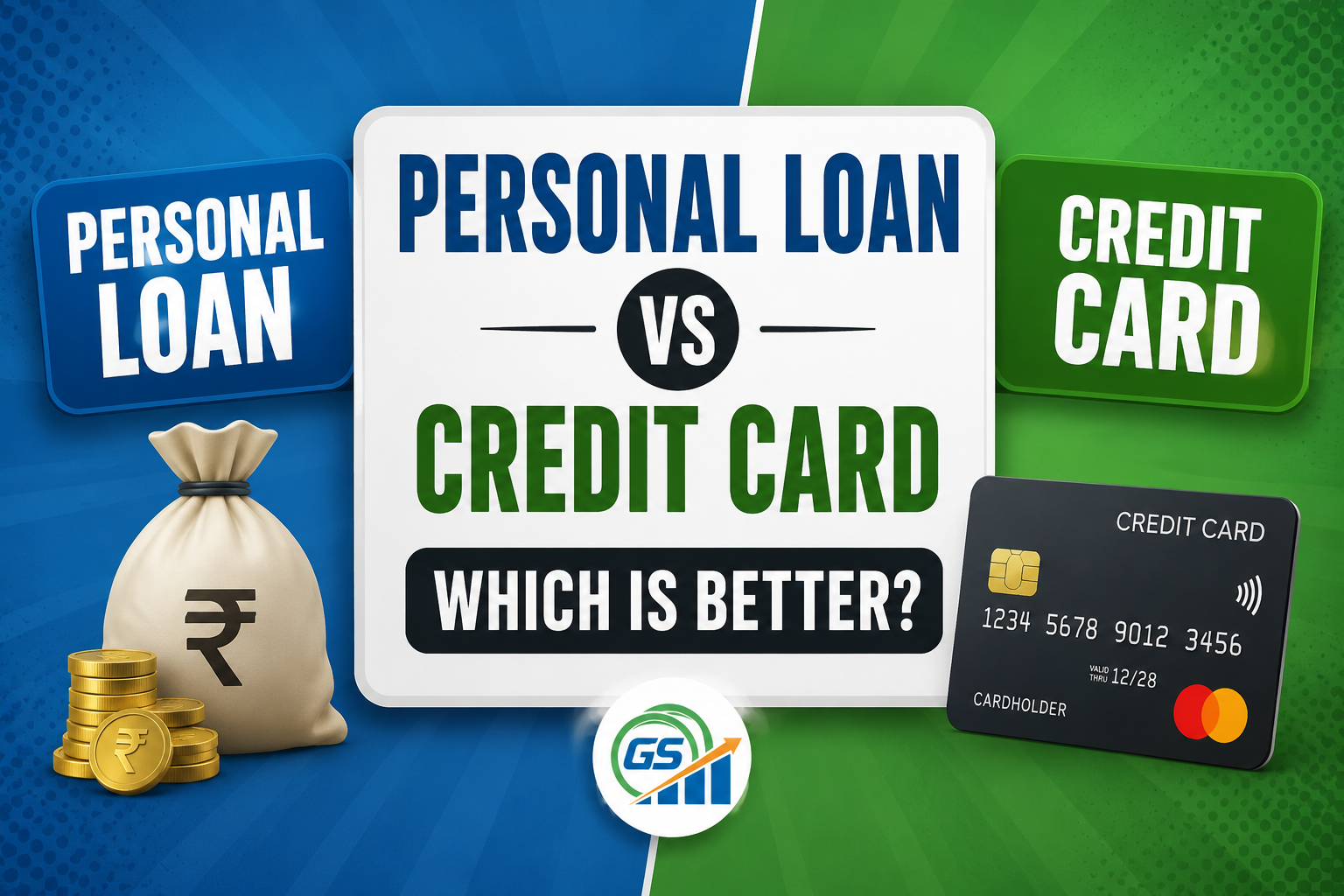
In today’s fast-paced world, unexpected expenses and financial needs can arise at any time. Whether it’s a medical emergency, home renovation, wedding expenses, or a planned purchase, many people turn to either a personal loan or a credit card for financial support. But which option is better?
The answer depends on your financial situation, borrowing needs, and repayment ability. Let’s compare personal loans and credit cards to help you make an informed decision.
What Is a Personal Loan?
A personal loan is a lump-sum amount borrowed from a bank, NBFC, or financial institution that is repaid over a fixed period through monthly installments (EMIs).
Key Features:
- Fixed loan amount
- Fixed repayment tenure
- Lower interest rates compared to credit cards
- Predictable monthly EMIs
- Suitable for large expenses
What Is a Credit Card?
A credit card allows you to borrow money up to a pre-approved credit limit for purchases, bill payments, and cash withdrawals. You can repay the borrowed amount in full or make minimum payments.
Key Features:
- Revolving credit facility
- Flexible borrowing
- Instant access to funds
- Reward points and cashback benefits
- Suitable for short-term expenses
Personal Loan vs Credit Card: Key Differences
| Feature | Personal Loan | Credit Card |
|---|---|---|
| Loan Amount | Higher borrowing limits | Limited to credit limit |
| Interest Rate | Generally lower | Usually higher |
| Repayment | Fixed EMIs | Flexible payments |
| Tenure | Fixed duration | No fixed tenure |
| Best For | Large planned expenses | Everyday spending and emergencies |
| Processing Time | Few hours to a few days | Instant if card already available |
When Should You Choose a Personal Loan?
A personal loan may be the better option if:
1. You Need a Large Amount
If you’re planning a wedding, home renovation, education expense, or medical treatment, a personal loan can provide substantial funding.
2. You Want Lower Interest Rates
Personal loans generally offer lower interest rates than credit cards, reducing your overall borrowing cost.
3. You Prefer Structured Repayment
Fixed EMIs help with budgeting and financial planning.
4. You Need Longer Repayment Tenure
Most personal loans offer repayment periods ranging from 1 to 7 years.
When Should You Use a Credit Card?
A credit card may be a better choice if:
1. You Need Immediate Access to Funds
Credit cards provide instant purchasing power without additional paperwork.
2. You Can Repay Quickly
If you can repay the outstanding balance within the billing cycle, you may avoid interest charges altogether.
3. You Want Rewards and Cashback
Many credit cards offer rewards, travel points, discounts, and cashback benefits.
4. You Need Flexibility
Credit cards are useful for recurring expenses, online shopping, and emergency purchases.
Interest Rate Comparison
One of the biggest differences between personal loans and credit cards is the cost of borrowing.
- Personal Loan Interest Rates: Typically range from 10% to 18% per annum (depending on eligibility).
- Credit Card Interest Rates: Can range from 24% to 48% per annum if balances are carried forward.
Because of this significant difference, carrying a credit card balance for an extended period can become expensive.
Which Option Is Better for Your Credit Score?
Both personal loans and credit cards can help build a strong credit history when managed responsibly.
Personal Loan Benefits:
- Demonstrates repayment discipline
- Improves credit mix
Credit Card Benefits:
- Helps build credit history
- Improves credit utilization ratio when used wisely
Late payments on either option can negatively impact your credit score.
Pros and Cons
Personal Loan
Pros
- Lower interest rates
- Fixed repayment schedule
- Suitable for large expenses
- Predictable EMIs
Cons
- Approval process required
- Processing fees may apply
- Less flexibility once loan is disbursed
Credit Card
Pros
- Instant access to funds
- Rewards and cashback benefits
- Flexible repayment options
- Useful for daily spending
Cons
- High interest rates
- Risk of overspending
- Debt can accumulate quickly
Final Verdict
There is no one-size-fits-all answer. A personal loan is generally the better choice for large expenses that require long-term repayment and lower interest rates. A credit card is ideal for short-term purchases, emergencies, and situations where you can repay the balance quickly.
Before making a decision, evaluate the amount you need, the repayment period, and the total cost of borrowing. Choosing the right financial product can help you meet your goals while maintaining a healthy financial future.
Need Help Choosing the Right Financial Solution?
At GS Financial Services, we help individuals find the best loan and credit solutions based on their unique financial needs. Contact our experts today for personalized guidance and hassle-free assistance.