
Introduction
Getting your first credit card is an exciting step toward financial independence. Whether you’re using it for online shopping, travel, or everyday expenses, understanding how a credit card works is essential. However, many beginners find themselves confused by the financial terms mentioned in their credit card statements and agreements.
Learning these basic credit card terms will help you use your card wisely, avoid unnecessary charges, and build a strong credit history.
In this guide, we’ll explain the most common credit card terms in simple language.
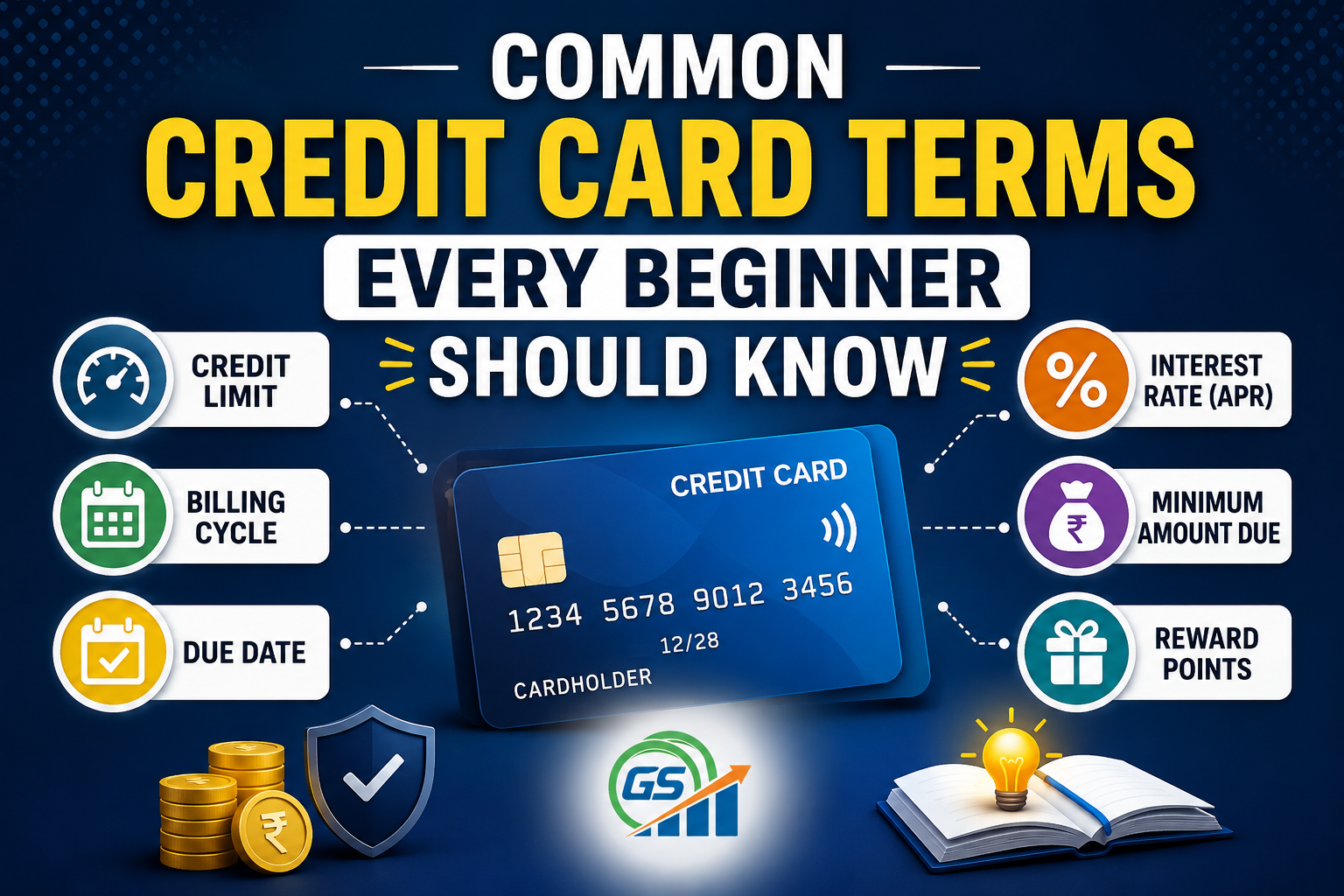
1. Credit Limit
Your credit limit is the maximum amount you can spend using your credit card. This limit is set by the bank based on your income, credit history, and financial profile.
Example:
If your credit limit is ₹1,00,000, you cannot spend more than that unless the bank approves an increase.
Tip: Try to use less than 30% of your available credit to maintain a healthy credit score.
2. Billing Cycle
A billing cycle is the period during which all your credit card transactions are recorded. It usually lasts between 30 and 45 days.
At the end of the billing cycle, your bank generates a credit card statement showing all purchases, payments, and outstanding balances.
3. Statement Date
The statement date is the day your monthly credit card statement is generated.
It includes:
- Total purchases
- Previous balance
- Payments made
- Minimum amount due
- Total amount due
4. Due Date
The due date is the last day to pay your credit card bill without incurring interest or late payment fees.
Always try to pay your bill before or on the due date.
5. Minimum Amount Due
This is the minimum payment required to keep your account in good standing.
Although paying only the minimum amount avoids late payment penalties, interest will continue to be charged on the remaining balance.
Best Practice: Always pay the full outstanding amount whenever possible.
6. Outstanding Balance
The outstanding balance is the total amount you currently owe on your credit card.
It includes:
- Purchases
- EMI transactions
- Interest charges
- Fees (if any)
7. Interest Rate (APR)
APR stands for Annual Percentage Rate.
It represents the yearly interest charged on unpaid balances.
If you pay your full bill every month, you generally won’t have to pay interest on purchases.
8. Grace Period
The grace period is the time between the statement date and the payment due date.
If you pay your entire balance during this period, you usually won’t be charged interest on your purchases.
9. Credit Utilization Ratio
This measures how much of your available credit you’re using.
Formula:
Credit Utilization = (Credit Used ÷ Credit Limit) × 100
Example:
- Credit Limit: ₹50,000
- Amount Used: ₹10,000
Utilization = 20%
Financial experts recommend keeping it below 30%.
10. Cash Advance
A cash advance allows you to withdraw cash using your credit card from an ATM.
However, cash advances usually come with:
- High interest rates
- Additional transaction fees
- No grace period
Use this feature only during emergencies.
11. EMI (Equated Monthly Installment)
Many banks allow large purchases to be converted into monthly installments.
Instead of paying ₹60,000 at once, you may choose to pay ₹5,000 every month for 12 months.
Always check the processing fee and applicable interest before converting purchases into EMIs.
12. Annual Fee
Some credit cards charge an annual membership fee for providing premium benefits.
Many cards waive this fee if you spend a certain amount annually.
Always compare the benefits with the fee before selecting a credit card.
13. Reward Points
Most credit cards reward you for every purchase.
Reward points can often be redeemed for:
- Shopping vouchers
- Travel bookings
- Electronics
- Gift cards
- Cashback
Different cards offer different reward rates.
14. Cashback
Cashback means receiving a percentage of your spending back as money or statement credit.
Example:
Spend ₹10,000 with 5% cashback and receive ₹500 back.
15. Late Payment Fee
If you fail to pay your bill by the due date, your bank may charge a late payment fee.
Repeated late payments can also negatively affect your credit score.
16. Credit Score
Your credit score reflects your creditworthiness and repayment history.
A higher score improves your chances of getting:
- Loans
- Better credit cards
- Lower interest rates
Timely payments and responsible credit card usage help maintain a healthy credit score.
Tips for First-Time Credit Card Users
- Always pay your bill in full.
- Never miss your payment due date.
- Avoid withdrawing cash using your credit card.
- Keep your credit utilization below 30%.
- Monitor your monthly statements regularly.
- Protect your card details while shopping online.
- Enable SMS and app notifications for every transaction.
Conclusion
Understanding basic credit card terms is the first step toward becoming a smart and responsible cardholder. Once you’re familiar with concepts like credit limits, billing cycles, APR, reward points, and credit utilization, managing your finances becomes much easier.
A credit card is a powerful financial tool when used responsibly. Pay your bills on time, spend within your means, and take advantage of rewards without falling into debt. With the right habits, your credit card can help you build a strong financial future.