

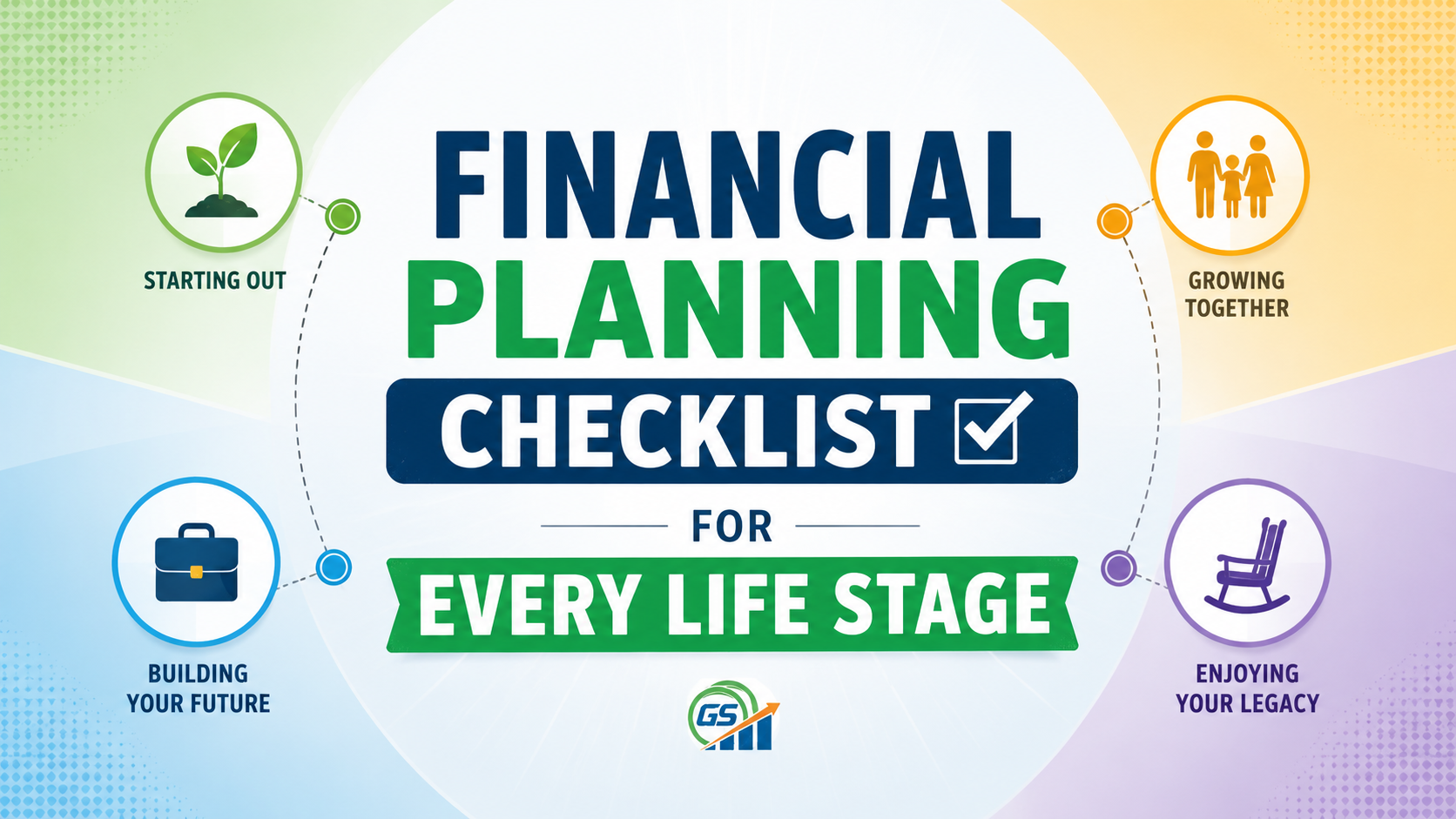
Financial planning is not a one-time activity—it’s a lifelong journey. As your income, responsibilities, and goals evolve, so should your financial strategy. Whether you’re just starting your career, raising a family, or preparing for retirement, having a clear financial plan can help you achieve long-term security and peace of mind.
This comprehensive checklist will guide you through the essential financial planning steps for every stage of life.
Why Financial Planning Matters
Financial planning helps you:
- Manage your income effectively
- Prepare for unexpected expenses
- Achieve short-term and long-term goals
- Build wealth over time
- Secure your family’s future
- Enjoy a comfortable retirement
The earlier you start planning, the more time your money has to grow through the power of compounding.
Stage 1: Early Career (Ages 20-30)
Your twenties are the foundation-building years. While retirement may seem far away, this is the ideal time to establish strong financial habits.
Financial Planning Checklist
✅ Create a monthly budget
Track your income and expenses to understand your spending habits and avoid unnecessary debt.
✅ Build an emergency fund
Aim to save at least 3-6 months’ worth of living expenses.
✅ Pay off high-interest debt
Prioritize clearing credit card balances and personal loans.
✅ Start investing early
Begin a Systematic Investment Plan (SIP) in mutual funds to benefit from long-term wealth creation.
✅ Purchase health insurance
Don’t rely solely on employer-provided coverage.
✅ Improve your credit score
A good credit score helps you qualify for loans with better interest rates in the future.
Stage 2: Family Building Years (Ages 30-45)
This stage often includes marriage, home ownership, and raising children. Financial responsibilities increase significantly.
Financial Planning Checklist
✅ Review and increase insurance coverage
Ensure adequate life and health insurance for your family’s protection.
✅ Plan for children’s education
Start investing early to build a dedicated education fund.
✅ Buy a home wisely
Evaluate home loan eligibility and choose affordable EMIs that fit your budget.
✅ Increase investments
As income grows, increase your investment contributions regularly.
✅ Create a will
Protect your family’s future by documenting your wishes legally.
✅ Establish multiple income sources
Consider side businesses, rental income, or dividend-paying investments.
Stage 3: Peak Earning Years (Ages 45-60)
These are often the highest earning years, making them crucial for wealth accumulation and retirement preparation.
Financial Planning Checklist
✅ Maximize retirement savings
Increase contributions to retirement and pension plans.
✅ Reduce outstanding debt
Work toward becoming debt-free before retirement.
✅ Diversify investments
Balance risk through a mix of equity, debt, fixed deposits, and other suitable assets.
✅ Review financial goals annually
Adjust plans based on changing priorities and market conditions.
✅ Plan for healthcare costs
Healthcare expenses tend to rise with age, making adequate coverage essential.
✅ Build a retirement corpus
Estimate future living expenses and determine how much you’ll need after retirement.
Stage 4: Pre-Retirement and Retirement (60+)
At this stage, preserving wealth becomes more important than aggressive growth.
Financial Planning Checklist
✅ Create a retirement income strategy
Ensure regular income through pensions, annuities, investments, and savings.
✅ Maintain adequate liquidity
Keep sufficient cash reserves for emergencies and healthcare expenses.
✅ Review estate planning
Update wills, nominations, and beneficiary information regularly.
✅ Optimize taxes
Take advantage of tax-saving opportunities available to retirees.
✅ Monitor investment risk
Shift toward lower-risk investment options to protect your capital.
✅ Plan your legacy
Consider how your wealth will be transferred to future generations.
Financial Planning Mistakes to Avoid
Many individuals delay planning and make costly mistakes. Avoid these common pitfalls:
- Living beyond your means
- Ignoring insurance needs
- Delaying investments
- Not having an emergency fund
- Depending on a single source of income
- Failing to review financial goals regularly
- Neglecting retirement planning
The Importance of Regular Financial Reviews
Your financial plan should evolve with your life. Experts recommend reviewing your financial strategy at least once a year or after major life events such as:
- Marriage
- Birth of a child
- Job change
- Home purchase
- Business startup
- Retirement
Regular reviews help ensure your plan stays aligned with your goals.
Final Thoughts
Financial planning is a lifelong process that requires discipline, consistency, and periodic adjustments. Every stage of life presents unique opportunities and challenges, making it essential to adapt your financial strategy accordingly.
By following this financial planning checklist, you can build a strong foundation, protect your family, grow your wealth, and achieve long-term financial security.
At GS Financial Services, we help individuals and families create personalized financial plans tailored to their life goals. Whether you’re starting your investment journey or preparing for retirement, our experts are here to guide you every step of the way.
Need professional financial guidance? Contact GS Financial Services today and take the first step toward a secure financial future.